Maliqa Fye
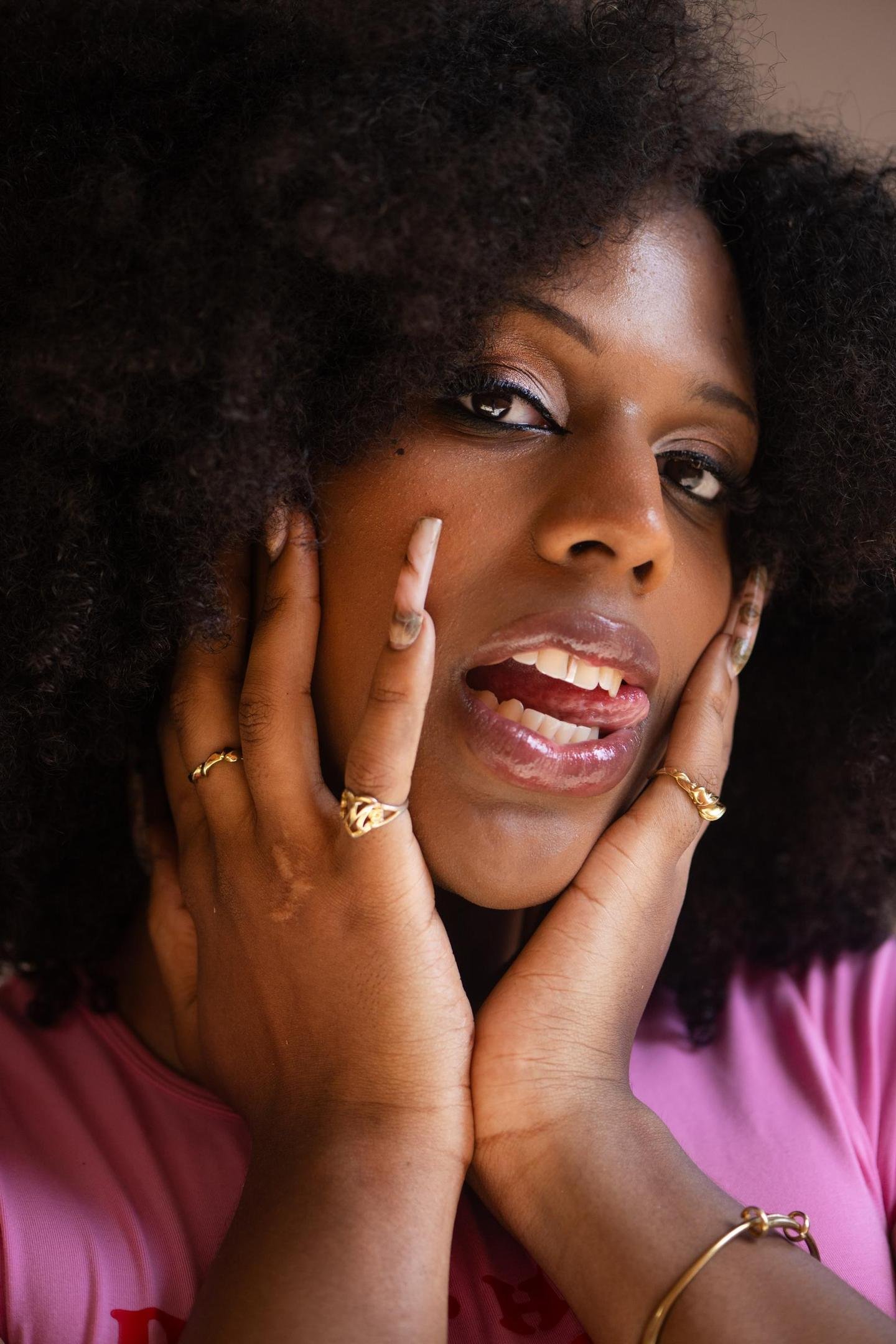
"I do what I want and dress how I want"
Maliqa Fye is an actress, theatre maker, and emerging writer. She studied Drama at KASK in Ghent.
Her work is rooted in aesthetics and form, exploring and revealing beauty.
She weaves themes of (trans-)femininity, heritage, and identity into sensory experiences, creating worlds that captivate, unsettle, and move.

SoftGore
During her residency at Antigone, Maliqa is developing a solo performance exploring her gender transition. In SoftGore, she asks questions such as:
What does it mean to be seen in the midst of change?
When you look at me, can you truly see me?
"My transition as a performance, my body as a performance, Diary as performance, trauma as performance.”
Maliqa in De Standaard – Change has always been a major theme in my life, whether it’s about my field of study or my gender identity. But I am still the same person. That’s why I like to emphasize what has never changed. My sense of humor, for example, has always stayed the same. I love to laugh, loudly and freely. I make a conscious effort not to hold back that laugh. Even if people can hear from my voice that I am trans, I don’t want to hide it. It’s who I am.
“What does monstrosity mean to you?”
– Correspondence
Maliqa for Etcetera – The performance FRANK by choreographer Cherish Menzo, which premiered at the recent Kunstenfestivaldesarts, explores the figure of the monster. Etcetera contributor Natalie Gielen and theatre maker and performer Maliqa Fye wrote letters to each other about monstrosity, and much more.
(...) This hyper-awareness doesn’t come from paranoia, but from historical truths, rooted in the experiences of Black bodies being publicly observed. (...) Menzo’s work draws attention to how monstrosity is not inherent, but projected. As philosopher Báyò Akómoláfé puts it: the monster is not a “what,” but a “how” — the way identities are distorted and controlled. This resonates with me. Not only my heritage or skin color, but also my identity as a trans woman can be described in similar terms of monstrosity.
As a trans woman of color who often performs on stage, I deeply understand the importance of breaking and reclaiming stereotypical representations. Not just to be seen, but to exist as a full, layered, and equal human being. Creating work that centers these dismantlings is, to me, admirable — something you do only out of necessity. A necessity I feel strongly in my own artistic practice.
(...) FRANK forces performers, audiences, and critics alike to rethink their roles within (racialized) structures of seeing and performing. And within that rethinking lies the true possibility for transformation. Both Susan Stryker and Frantz Fanon reveal an unavoidable link between marginalized groups and monstrosity, followed by a desire or call for active resistance.
(...) This is a performance that literally rises up, bares its sharp teeth, and reclaims space on its own terms. It takes back the space that was denied and asks questions of everyone who watches. I was certainly unsettled, but above all, ready to unsettle!